
“The Christian says, ‘Creatures are not born with desires unless satisfaction for those desires exists. A baby feels hunger: well there is a such a thing as food…If I find in myself a desire which no experience in this world can satisfy, the most probable explanation is that I was made for another world.’”
– C.S. Lewis, Mere Christianity
I wonder often about how the idea of “forever” became such a staple in human society. We want to be best friends forever, in love forever, together forever. We have such a strong inclination to believe good things should not (and maybe will not) end, when we have absolutely no physical, experiential evidence of forever.
We learn early about endings. Our goldfish dies, we get in a fight with our best friend, we’re called inconveniently inside for dinner right in the middle of our favorite game. All we’ve seen is endings, and they get worse as we get older. Deaths, breakups, and loss only get heavier as we age and we find it harder to believe in “forever” when it does not naturally exist in our world.
So, why do we think it should? If we have no experience with anything or anyone actually lasting forever, why does it seem to be so innate in us to hope for it? Why does there seem to always be an element of surprise when someone dies? Or a struggle to let go of someone long after the relationship ends?
On top of that, there’s always this feeling of running out of time. The weekend is never long enough, vacation is never long enough, we get to the end of something good and almost always wish there was just a little more time.
“Not only are we harried by time, we seem unable, despite a thousand generations, even to get used to it. We are always amazed by it — how fast it goes, how slowly it goes, how much of it has gone…We aren’t adapted to it, not at home in it.”
– C.S. Lewis in a letter to Sheldon Vanauken, as recorded in Vanauken’s book A Severe Mercy
Alright, you see what I’m getting at – that maybe we have a desire for forever because we were indeed created for it, despite not seeing it this side of heaven. I love how C.S. Lewis puts words to that desire, but he is far from being the only author to write the hope of heaven into his books. In fact, many books touch on our desire for a world where the order of things is different, whether the author is Christian or not.
Tolkien writes of Gandalf convincing Bilbo Baggins out of his comfortable home, to go on the adventure of his lifetime. Baggins believes at first this adventure is totally contrary to his strengths, only to find the adventure fit him perfectly. Rowling writes of Harry Potter discovering a world he didn’t know existed, yet wholly belonged (and Disney has made millions on other people’s hopes of getting their own letter to Hogwarts). The Marvel franchise (worth about $58 billion in 2021) plays on our desire for a savior, for hope there are other forces at work for the common good. Thousands of other books and movies describe quests in which the main character finds hints of an ancient or magic world that is closer than they think. And of course, there is Lewis’ Narnia. Which has us hoping one day we may open our own wardrobe to find something extraordinary.
For now we see in a mirror dimly, but then face to face. Now I know in part;
then I shall know fully, even as I have been fully known.
1 Corinthians 13:12
The verse above comes from the same chapter as the most popular passage to read at weddings (“Love is patient, love is kind…”). Yet, usually the officiant doesn’t get this far through. If he did, we’d be reminded that for all the beauty and splendor of the most joyous moments of our lives, it hardly scratches the surface of what we were created for.
I recommend A Severe Mercy to anyone wondering how to grasp onto forever – believer in Jesus or not.
I recommend Mere Christianity to anyone looking for intellectual proof of God.
I recommend Narnia, specifically the first book The Magician’s Nephew, to those who need hope of another world that’s closer than we dare think.
For we know in part and we prophesy in part,
but when the perfect comes, the partial will pass away.
1 Corinthians 13:9
For those of us confident in heaven, having a relationship with the God who put forever in our hearts, I urge us to prophesy of goodness of God already experienced here on earth. Though only a small part, God’s work now is a beacon of hope that forever is closer than we think if only we pick up the right ring or walk through the right wardrobe
In closing, I feel I must mention I read many more authors than C.S. Lewis, yet he articulates this idea so well, hence the many quotes. I’ve thought about this topic often, the discrepancy between what our souls sense should be and what really is. It is subtle, yet the cognitive dissonance is there. The fact that “forever” is mentioned in almost every wedding – Christian or not – further proves to me we have heaven knitted into us. I pray we realize it.
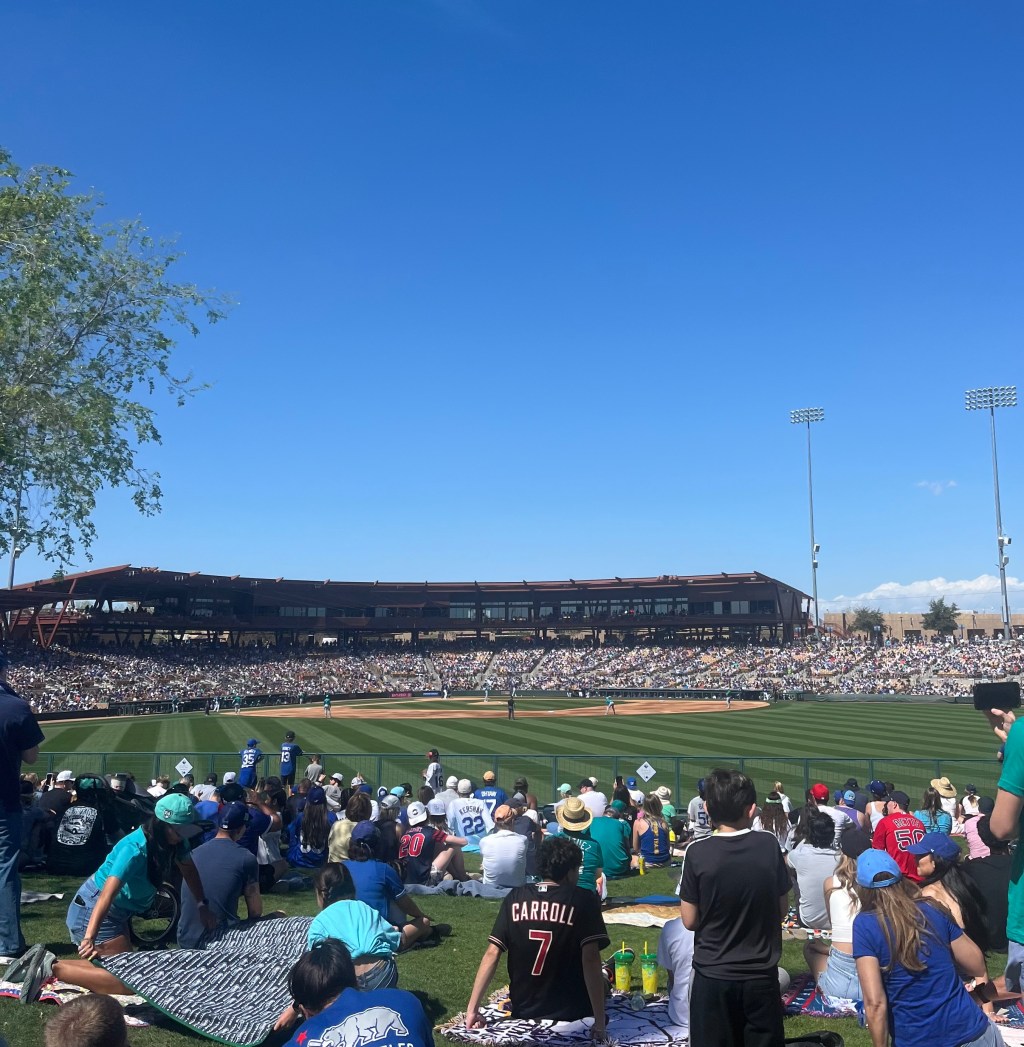
Of course this side of heaven, the only thing that comes close to lasting forever is a baseball game. Selah.





 Gracie Girl Blog
Leave a comment